
 Web Desk
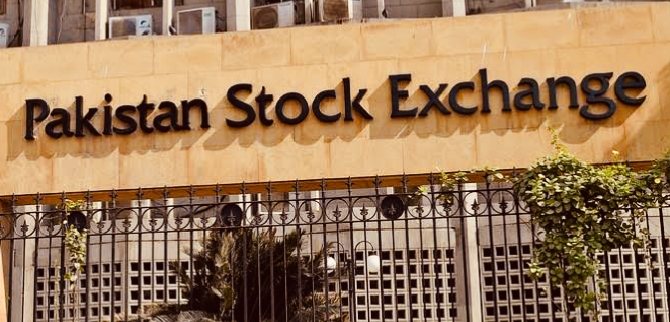
 The corporate landscape of Pakistan reflected a day of intense pressure at the Pakistan Stock Exchange on Wednesday, March 4, 2026. The KSE-100 index, often considered the barometer of the country’s economic health, experienced a notable setback, closing at 155,777.21 points. This represents a substantial decline of 1,354.88 points from the previous day.
For corporate analysts, the most interesting aspect of this wrap is not just the total point loss, but the sectoral divide between those companies that thrived and those that struggled. The data shows a stark contrast in the energy and fertilizer sectors compared to the financial and cement industries. While the overall market sentiment was negative, certain blue-chip companies demonstrated remarkable resilience amidst the broader sell-off.
On the positive side of the ledger, Engro Fertilizers emerged as a critical pillar for the market, contributing 160.44 points. This performance, coupled with contributions from energy giants like PPL and OGDC, indicates that commodity-linked sectors are still finding favor with investors. Pakistan State Oil and Mari Petroleum also managed to stay in the green, providing much-needed points to a bleeding index. These companies represent the “Pullers” of the market, effectively preventing the 1,354-point drop from becoming even more catastrophic. Their ability to attract investment on a day of widespread panic suggests strong underlying fundamentals or perhaps a reaction to global energy price shifts that favor their current business models.
Conversely, the “Draggers” list provides a sobering look at the challenges facing Pakistan’s financial and industrial leaders. Engro Corporation led the downward spiral, a move that likely influenced sentiment across its various subsidiaries despite the success of its fertilizer arm. The banking sector, led by HBL, UBL, and NBP, saw significant value erosion, collectively dragging the index down by over 500 points.
This sectoral weakness in financials is often a leading indicator of broader economic anxieties, such as interest rate concerns or liquidity issues within the corporate sector. Furthermore, Lucky Cement’s presence on the draggers list suggests that the construction and infrastructure sectors are also feeling the heat. As the market reflects on a CYTD loss of 10.50 percent, corporate Pakistan must navigate these volatile waters with caution, balancing the strong FYTD growth of 24 percent against the immediate headwinds that caused today’s sharp contraction.

 Islamabad Becomes Global Diplomatic Hub for US-Iran Dialogue
  Silver Price in Pakistan – 18 April 2026
 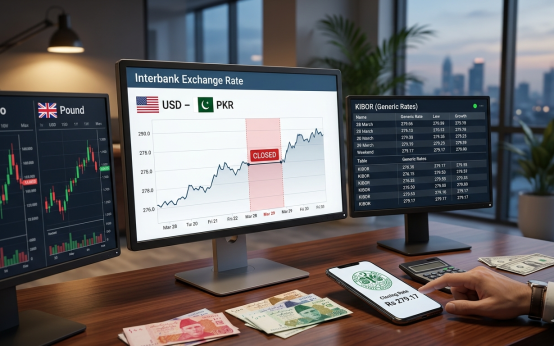 Interbank Rate Today in Pakistan PKR – 18 April 2026